
Surprisingly this sparsely populated country has a few achievements worth noting at the forefront of citizens rights. Finland was one of the first countries to introduce Universal Suffrage and the first Parliament to have elected women members. Finland has a representative democracy but how does this all work and do people actually feel better represented?
Part 3. Openness and Accountability

The last President, Sauli Niinistö was very popular with the majority of Finns. People seemed to feel that he was just a normal guy and easily approachable. Often when out on the streets, people would casually shout out “Moi Sauli, miten menee!” Hi Sauli, how’re you doing. A little banter with the President.
Access to politicians, the big guns and lesser known, is fairly open and at election times it is easy to find the candidates out in city squares canvassing the locals. Their party gazebos tempting prospective voters with free soup, sausages or coffee.
Politicians Accountability
Ultimately politicians are held to account at the ballot box every five years by the voting public, but what happens while the Parliament and Government is running? All MPs have the ability to hold the Government to account. At question time MPs can ask ministers about the Government’s actions and criticise policies. Parliament does not vote on matters during question time. Members can also submit written questions to the minister responsible for a particular matter, who must reply within 21 days. With the backing of at least 20 MPs, the opposition can submit an interpellation in order to measure confidence in the Government or a particular minister. The Government must reply to an interpellation in Parliament within 15 days. After hearing the reply Parliament debates the matter and then votes on whether the Government or a minister enjoys its confidence.
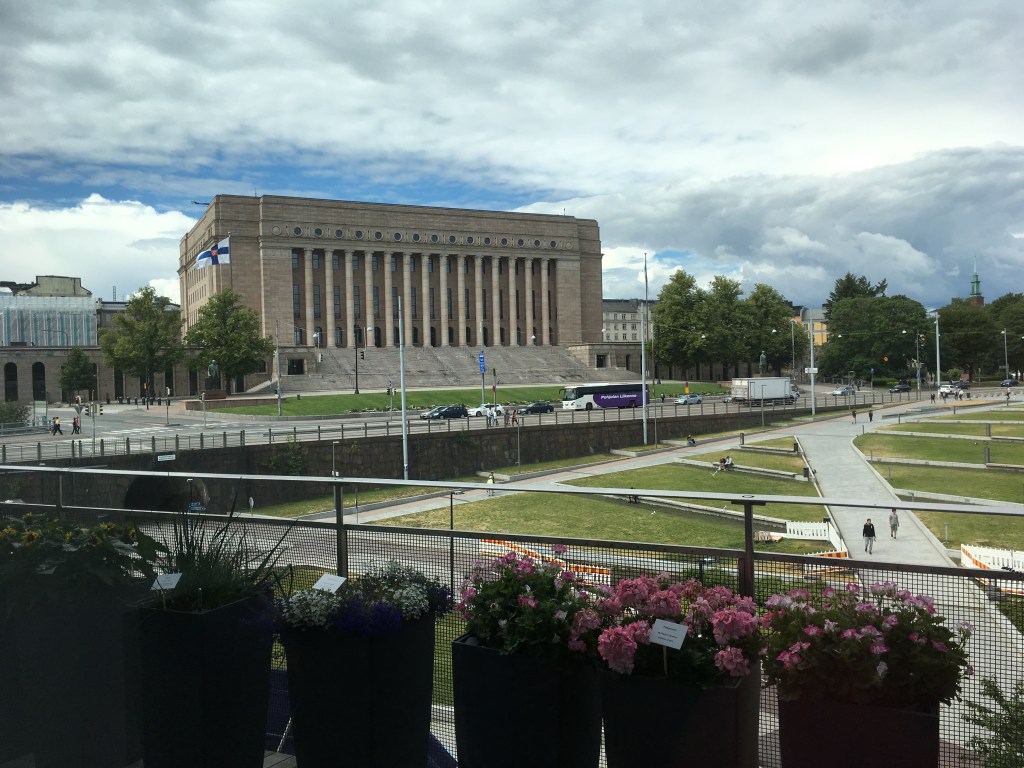
Ministers of State seem to be held to high standards, the smallest error in an expense claim can lead to resignation. Members of Parliament are required to declare business or other income over €5000. There is also an obligation to declare debts taken for business if their combined total exceeds €100,000, and guarantees and other liabilities if their combined total exceeds €200,000. Gifts valued over €400 and trips funded by a third party with a value over €400 all have to be declared and can be inspected in the public register.
The National Audit Office monitors campaign spending and candidates if successful are required to submit a full account of all monies spent within two months of the election. A full account means listing and transparency for all monies, including the names of donors. At the present there are no limits for campaign spending which in the future may become more of a problem with an unfair advantage for any party that can raise the most cash.
Lobbying is not regulated in Finland at the moment either, although reputable lobbyists appear to have a voluntary code of conduct. Citizens are not really aware of the influence of big money, big business and other pressure groups. The EU has had a Transparency Register of Lobbyists since 2011, although this too is voluntary. Hence, the lobbying system is wide open to abuse by a rogue player. The website www.korruptiontorjunta.fi/en monitors possible corruption.
The Finnish Confederation of Business (www.ek.fi) was involved in lobbying MPs when the current Government was creating its new programme. Policies have been devised that restricts conditions of work and employment together with cuts to work based benefits, which all favour employers. Into the spring months the Unions have had to respond with strikes in protest at the proposed deterioration of workers conditions. Hopefully a compromise will be reached, but the Employers are quite happy to hide behind the Government.
Freedom of the Press
Independent journalism often finds the news stories exposing corruption, so a free press is a huge part of a full democracy. The media are free in Finland, where the world’s first law prohibiting censorship was passed in 1766. Finland has a relatively small population of about 5.5 million people. The official languages are Finnish, and Swedish, with Sami recognised in Lapland. Being a well educated society, the Finns love to read.
The news media is diverse, with a strong public broadcaster (YLE), that has almost half of both TV and radio audiences, some privately owned domestic broadcasters, an increasing number of online news outlets, and many regional and local newspapers. YLE is owned by the Parliament but MPs have no role in the appointment or dismissal of journalists. YLE provides material in Finnish, Swedish, Sami, Russian and English.
Apart from YLE, the media are mostly privately owned and the number of media outlets relative to population size is one of highest in the world. Social media is undermining the business model of the mainstream media with the unfortunate result that media ownership, is becoming increasingly concentrated, leading to the possibilities of more editorial control by a few wealthy owners. The authorities are not allowed to favour any particular media. No case of corruption of a journalist or editor has been reported in Finland.
The serious newspapers in the Helsinki area are the two dailies, the Finnish language Helsingen Sanomat and the Swedish Hufvudstadsbladet. Generally they have good news coverage and balanced analysis. The lighter tabloid afternoon newpapers, Iltasanomat, and Iltalehti seem to have slipped into being typical Tabloids and provide coverage of celebrities and associated life, the gossip.
The Judicary
In Finland the Courts uphold the rule of law and effectively hold all people, including the Government and politicians to account. It is important that the judiciary has the ability to be objective and free from influence. Independence of the Judiciary from political interference was setup by the Constitution, to ensure that all citizens are treated fairly according to the law.
Finnish judges are appointed by the President on recommendation from the Minister of Justice, as advised by a Judicial Appointments Board. This independent board makes selections for the filling of positions in the judiciary with a reasoned proposal. The Board has no jurisdiction over the appointment of Judges to the Supreme Court and the Supreme Administrative Court. These highest courts make their own appointment proposals to the President of the Republic, who is the final decision maker.
The Board is expected to promote the recruitment of judges from all walks of legal life, that is, from the civil service, academia and the legal profession. The Judicial Appointments Board is composed mainly of members of the judiciary, but three members come from outside the judiciary. One is a practising lawyer appointed by the Bar Association, another is a prosecutor appointed by the Prosecutor General, and the third is an academic appointed by the Ministry of Justice.
 Happy in Finland
Leave a comment