
Surprisingly this sparsely populated country has a few achievements worth noting at the forefront of citizens rights. Finland was one of the first countries to introduce Universal Suffrage and the first Parliament to have elected women members. Finland has a representative democracy but how does this all work and do people actually feel better represented?
Part 1. Establishment of Democracy
Being able to vote for your representatives does not necessarily relate to having a full democratic system. Do the votes count and then result in the elected politicians acting in the best interests of the country and its citizens? Hence other measures are also needed to gauge how free and represented citizens feel in a truly representative democracy.
The Economist Intelligence Unit’s (EIU) annual Democracy Index uses information about how citizens can choose their political leaders in free and fair elections. It does prefer democracy over other political systems and so measures civil liberties, the systems in place, the participation in politics, and how a government functions on behalf of the citizens. Nordic countries, Switzerland and the Republic of Ireland consistently score highly in the index. Better than even the UK with the Mother of all Parliaments, and the USA being the leader of the free western world.
Finland’s Democratic History
How does Finland in particular score so highly in many of the democratic and socio-economic measurements in the EIU index? Much of the country’s success may be due to its geography and history. Lying between Sweden and Russia, for centuries it has been a buffer between two different societies, the East and West. From the 11th Century Swedish colonies were being established around the Southwest coasts of Finland and through the 12th and 13th Century the Roman Catholic Church developed together with Swedish control. Before the Swedish, huge swathes of the interior of Finland were unoccupied. Gustav Vasa became king of Sweden in 1523 after liberating the country from Danish influence and uniting the Barons. Gustav Vasa’s significant legacy was the reorganisation and centralising of government, the cut of religious ties to Rome and the change to the Lutheran church. This Swedish administration benefitted the Finns too. They had the same rights as all Swedes, and the start of an egalitarian society. The Finnish city of Vaasa was named after Gustav in 1606 which reflects the popularism of Swedish influence.
In the 16th Century, Mikael Agricola, the Bishop of Turku, recorded the first written Finnish, establishing it as an official language, and one of the determining factors creating a separate national identity. For 600 years the majority of Finland was Sweden, with the Catholic Church, then the Lutheran Church. Hence, Finns feel much more Western than Eastern in their outlook.
The Russian Occupation
The 19th Century occupation of Finland by the Russians continued the egalitarian standards of the time, the same Swedish laws, and the country became a self-governed autonomous Duchy of the Tsar’s Empire. The Tsar placed emphasis on developing Finland and many public buildings originate from this time. The Russians also built more defences but the population generally carried on speaking Finnish and Swedish. Late 19th century saw the rise of Finnish nationalism and the popularity of home traditions and culture. Then in 1917, Finland facilitated the safe return of Lenin from exile in Switzerland. The Germans considered him so toxic, that Lenin could only travel across Germany in a sealed railway carriage.
The First Finnish Parliament
The parliamentary system had origins during the Grand Duchy of Finland. The Tsar created the Diet of the Four Estates – nobles, clergy, burghers and peasants, who began meeting regularly in 1863 and passed some 400 pieces of legislation. Finns strongly opposed Russian efforts to bring Finland more tightly under the Tsar’s grip. Turmoil in Russia opened the way for parliamentary reform in Finland. A single chamber Parliament and the introduction of universal suffrage was proposed, and the Tsar approved it, to establish the Finnish Parliament in 1906. All citizens over the age of 24 were able to vote in the first elections of 1907 making it the most modern Parliament of its time. No longer was the right to vote dependent on social status or gender. Finnish women were among the first in the world to exercise full political rights, including the right to stand for election. The 19 women who were elected to Parliament in March 1907 were the first women MPs in the world.
Finnish Independence
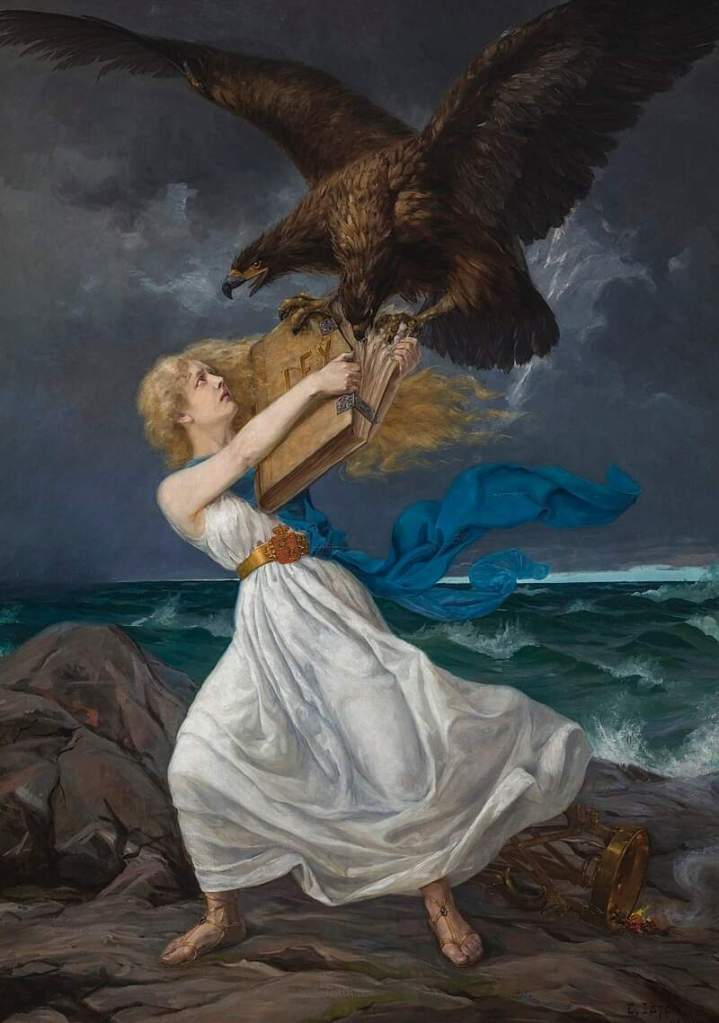
With the Russian Revolution, the fall of the Russian Empire, Finland took the opportunity to declare independence on 6th December 1917 and the new Bolshevik Russian Government affirmed this by the end of the month. The birth of a new country, involved much debate about how the state should be set up. At one point a Monarchy was proposed but eventually a constitution was agreed, but only after a bitter civil war in 1918.
After the civil war, the Finns settled on a republican constitution that gave the President broad powers, including the right to dissolve Parliament. The basic features of the Constitution of 1919 continue into the current Constitution. Political power in Finland is vested in the people, who are represented by Parliament. The Government must enjoy Parliament’s support and MPs can measure Government performance, and if necessary demand a vote of confidence. The constitution guarantees the inviolability of human dignity and the freedom and rights of the individual and promote justice in society. It sets out the legal framework for the administration and governance of the country and includes the rights of citizens. An English translation can be found here:
http://www.finlex.fi/en/laki/kaannokset/1999/en19990731_20180817.pdf
 Happy in Finland
Leave a comment