
Almost ancient history now, back in Britain in 2010, I thought it a little exotic to be dating a Finnish girl. She had almost perfect English, the locals thought that she might have come from The Netherlands, because after living in the UK for a decade had picked up all the slang and mastered understanding of many different regional accents apart from Glaswegian Scottish. Little did I know about other languages, a little German from school, a little holiday French, definitely no Finnish, yet within two years we would be married and moving over 3000 kilometres to Finland.
The first time I heard Finnish in the UK, was on a walk besides the canal in Worcester. I spotted a hire boat with the Swedish flag flying, and said out load “Hey Darling! Those guys are from your part of the world”. The man on the boat looked up and said “no I am not Swedish, I’m Finnish” and then continued in Finnish, at which point I was lost but M’s face altered as if her brain was changing gear, and the conversation continued in Finnish. Quite a revelation to me, that she had this hidden talent and secondly, a language that made no sense to me at all.
Moving to Finland
Once we knew that a possible move was on the cards, my stepdaughter and I, started a short Saturday morning Finnish language course at the Solihull branch of the Finnish Guild. We grasped some basic phrases and both of us could count to ten by the time of the move. We were very under equipped for life in Finland but at least one family member was fluent and had family for backup.
Boxes were packed, furniture minimised, lots of junk chucked, and we packed as much as possible into our campervan for the big journey. The boxes followed by carrier later. Tip for those considering an international move; it’s often cheaper to purchase new or second hand furniture in the new country than pay huge moving costs. We took our time for the journey and made it a holiday with two dogs and a cat. Across Europe there were no language problems, our poor skills were more than compensated by the ability of locals to speak English. There were only a couple of hitches. One was in Belgium where M had not understood the shower instructions. She did not realise that a token was required for hot water and suffered a cold but quick shower. Then the next day, my purchase of sour milk instead of normal milk from a Dutch supermarket. Small crisis for a few hours, sour milk does not go with tea.
Settling In
Life started in Finland. M went to her new job and C started at a new school. The normal local Primary School. Although a Finnish citizen, poor C had a big culture shock. The first six months she was not happy, not being to readily chat with her school mates. There are limited places in the Espoo City International school where everything is taught in English. However, we wanted C to be able to speak both languages fluently and keep all her options open by joining the Finnish education programme. In Espoo the international kids are helped to integrate into school and Finnish life with a special class. This integration class concentrates on teaching Finnish language and getting students up to speed with the general Finnish curriculum. The children spend a year in this group before joining a class one year behind their usual year group. C started school in October and by Christmas was very happy to go to school and merrily chatter with her new school mates in Finnish and English. This transition had been helped by a neighbours child, the same age, who was at a school where English was taught a lot, and helped C with socialising and playing with all the local gang. Having bi-lingual friends was a big leg-up for C.
Finding Work
Meanwhile I was without work and able to set up the household comfortably. After six months, I realised that I could apply for unemployment benefits. As part of this I was also offered an integration Finnish language course and then spent a year or so learning basic Finnish. It felt more like home once I could understand advertising boards and find my way around easier knowing that little bit of basic Finnish. After a couple of years, I did manage to find that elusive job and it took years because Finnish is one of the most difficult languages to learn. May be Chinese is more difficult but that’s because of a whole new array of letter characters to learn.
To an outsider, speaking Finnish is like a super power. Luckily our daughter started at an early enough age because now 10 years later she is fluent in both English and Finnish. Not perfect in either, but not surprising when kids these days do not seem to read enough to develop vocabulary. My Finnish is still quite basic, my pigeon Finnish is a lot worse than any Finn’s English that I encounter in everyday life. My academic qualifications are in agriculture and teaching, and it proved difficult to find work. Locally there are not many farms, and the teaching professions requirements are beyond my limited Finnish skills. The few teaching vacancies at the International Schools are easily filled and I really have been out of the front of the classroom for too long. Eventually I was lucky to gain work after completing my language courses with a subsidy from the Finnish Employment office. You can apply for work and offer a good deal to the employer if the Employment office offer to keep paying your benefits in exchange for ‘work experience’. Mine led to a temporary fully paid work contract and eventually a permanent full-time contract.
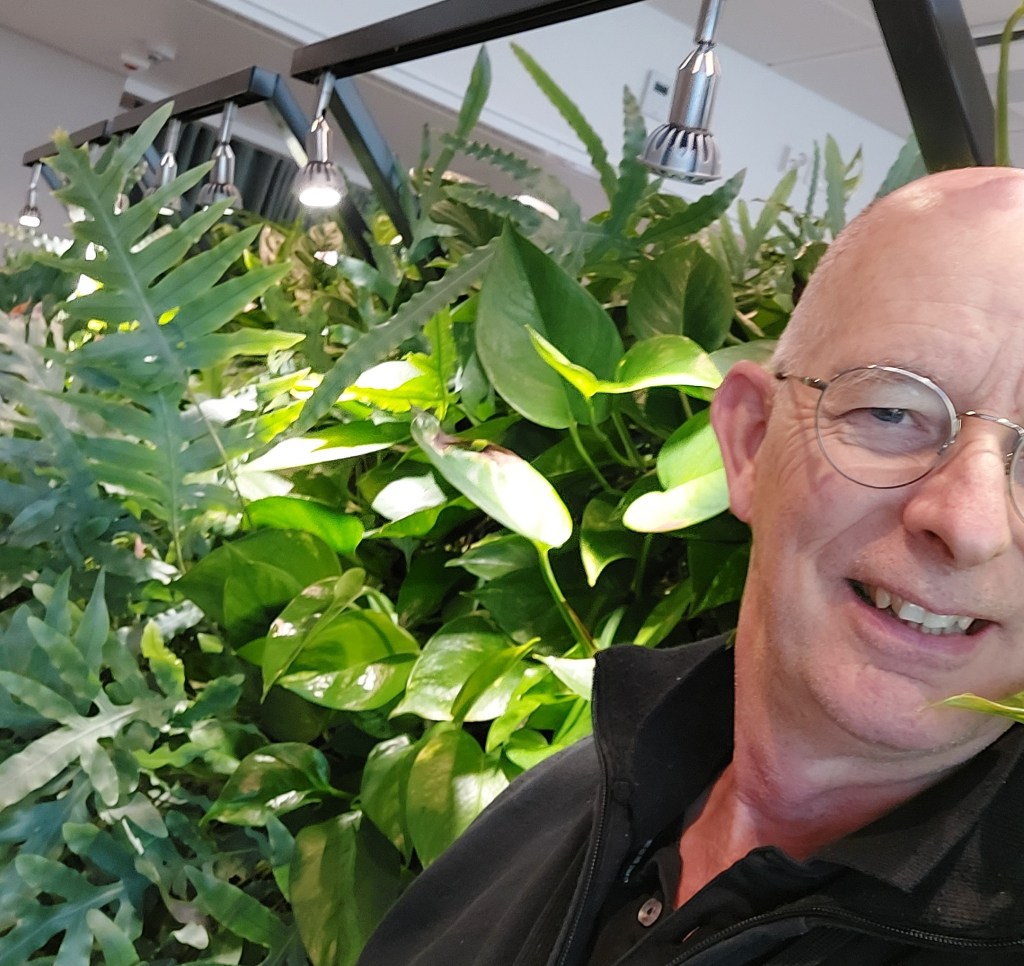
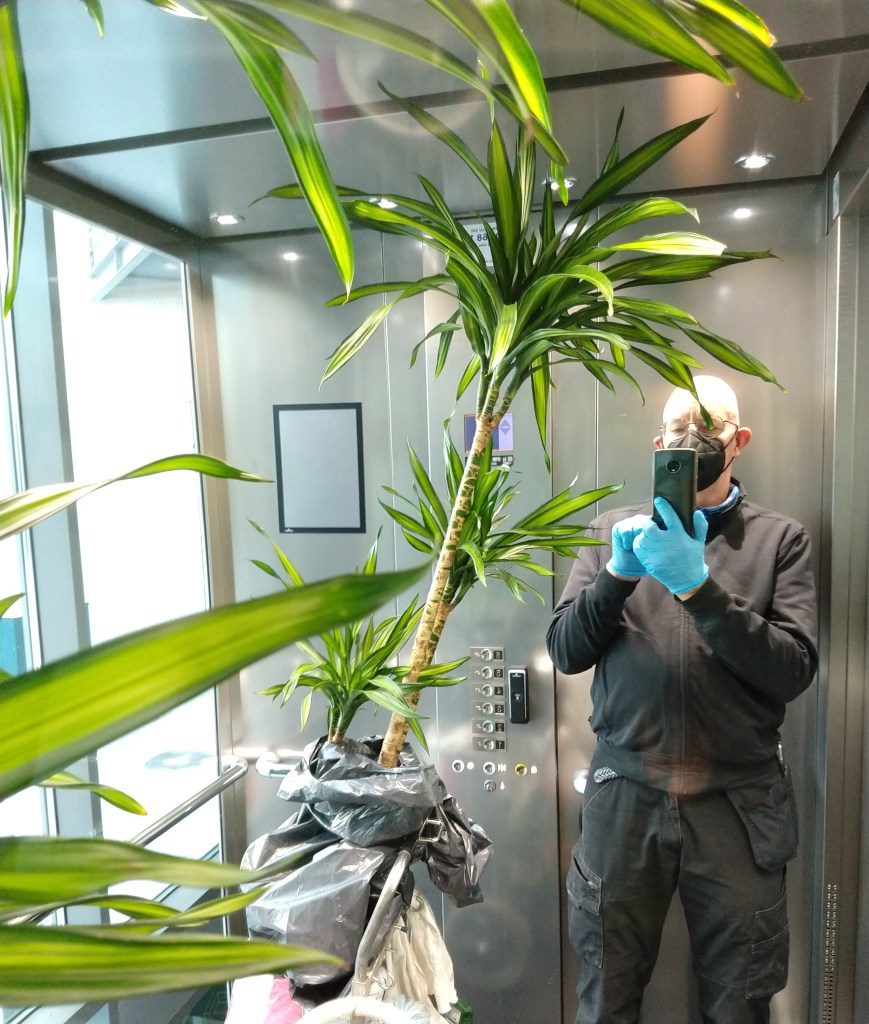
Now I work caring for green plants in offices and big buildings. Plants don’t need Finnish language and I get by with my Finn colleagues with my basic Finnish language, photos and Google Translate. All of my clients whose premises I visit, speak English well and are delighted to practice their skills with a native speaker. That is the biggest hurdle to learning Finnish – having a nice British accent. As soon as I open my mouth speaking Finnish, the native speaker recognises where I’m from, I start to stumble with my Finnish words and then we are straight into English.
Language Barriers
It is not easy to find work in Finland, especially if you are not fluent in the local language. If you have very specialist skills particularly in the IT business world, then you stand a better chance. Most international companies have English as their official language. You may even have been lucky enough to be head hunted to work in such a big business. Obviously, the medical professions, where most of the customers/patients are likely to be Finnish people, require a high degree of language proficiency. For non-native speakers, there’s an extensive language test to be able to practice as a Doctor in Finland. The same high language standards are required in the teaching profession, municipalities can not employ someone in a normal Finnish school who does not have good Finnish skills, unless it is for a specific role, or for one of the limited vacancies at an International School.
Many other jobs do not really need proficient skills in Finnish unless you are likely to be customer facing. However, many such roles when advertised still insist on employing near native speakers because they want people to integrate fully in the work place. It is a big barrier for migrants. Although sometimes the boot can be on the other foot for my Finnish colleagues who have weaker English language skills. As I mentioned before, many of the businesses that I visit have English as their official work language. When I had to swap a client with a colleague, I discovered that she was apprehensive about visiting that business because they all speak English. I reassured her that the building manager was the only person that I had to speak with, and he was a native Finn. Generally in Finland, the language barrier results in many migrants ending up in jobs well below their qualification levels. A wasted resource. You can read more about research related to this by looking up Ndomo Quivine who is a lecturer and researcher at the University of Jyvaskyla.
Breaking the Status Quo
The views of some Finnish people have drifted in the same direction as the USA and UK. There has been an upswing in immigrant haters and the popularity of the Perus Suomalainen Party (True Finns Party), now sharing Government is evidence of this. The Government as a result has swung to the right and presently is creating more restrictions for immigrants and penalising those not in work. They are breaking the status quo in this Social Democratic Nordic country. In the past people have been prepared to pay higher taxes for good services and to ensure everyone has a reasonable life and good opportunities. In Finland education has been free all the way from Primary to Tertiary and also for re-training but now there are threats to these things that have always been so well funded in the past.
Fortunately, the Unions are big in Finland and perhaps one of the reasons that the country has been so socially equitable. Even though the ongoing big strikes protesting about these Government changes are inconvenient, according to a YLE (the State broadcaster) survey, 58 percent of Finns indicated their approval. 35 percent of respondents said they did not approve of political strikes while seven percent were undecided. It still does annoy me to hear the nationalist politicians going on about migrants free riding because walking around some areas of Helsinki, the drunk lay abouts that I see are all very Finnish. The politics of division and populism wreaks countries for a few people’s short-term gains. Let us hope common sense and kindness succeed.
 Happy in Finland
Leave a comment